


Off-Road Wheelchairs, Designed From Lived Experience
Several generations of electric mobility hardware, tested by riders on grass, trails and snow
These projects started with a problem we know first-hand. Grass, gravel, trails and snow are where a manual wheelchair's small casters dig in and pushing becomes exhausting. We wanted to go there anyway.
Clip-On Drive Units
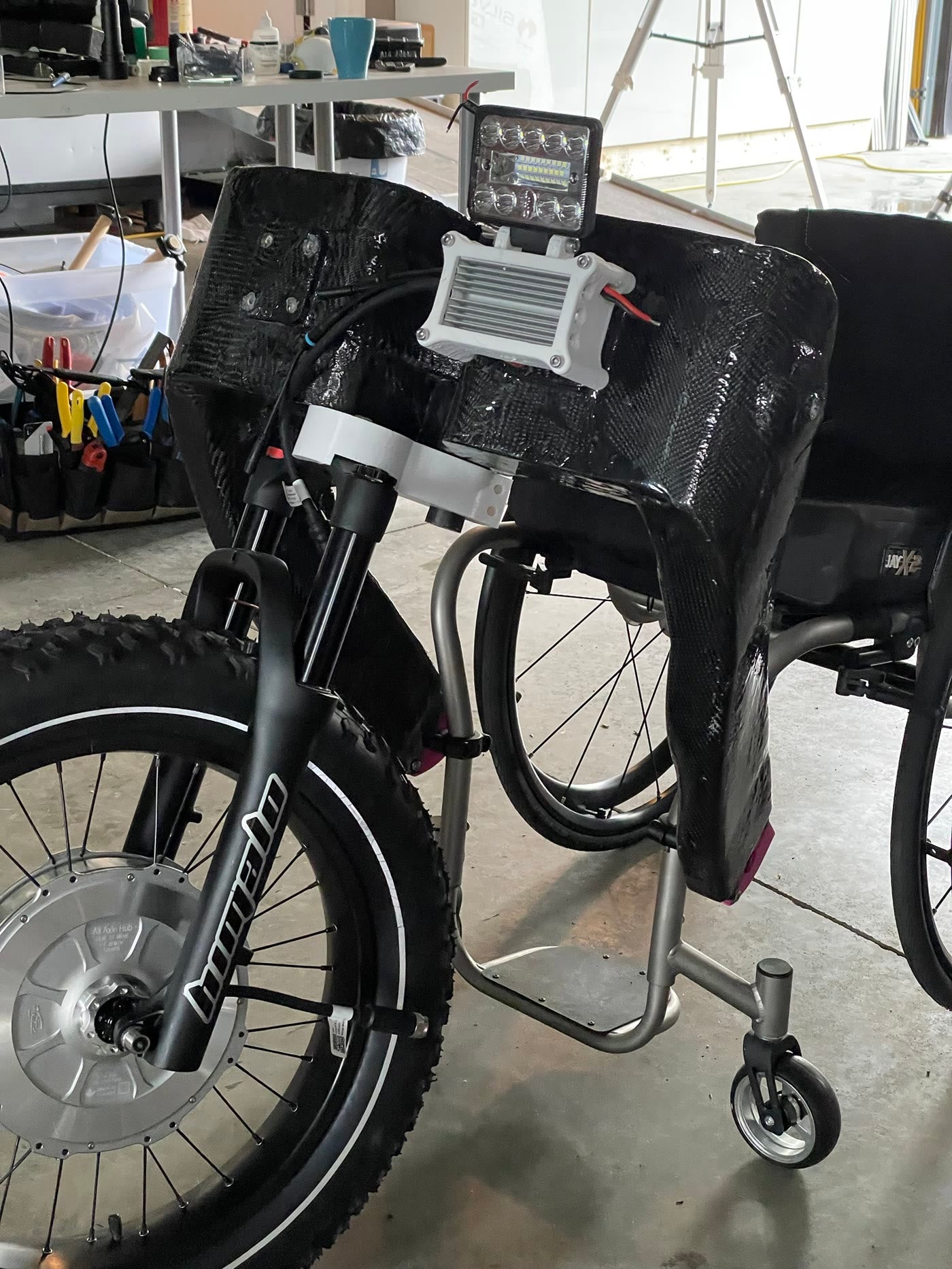
The first approach turns the chair a rider already owns into an off-road machine. A front drive unit clamps to a manual wheelchair and adds a fat-tire wheel with a hub motor, a suspension fork, a headlight and handlebar controls.
The bodywork evolved across generations, from printed shells to carbon fibre, getting lighter, stiffer and better looking along the way.

Complete Off-Road Chairs
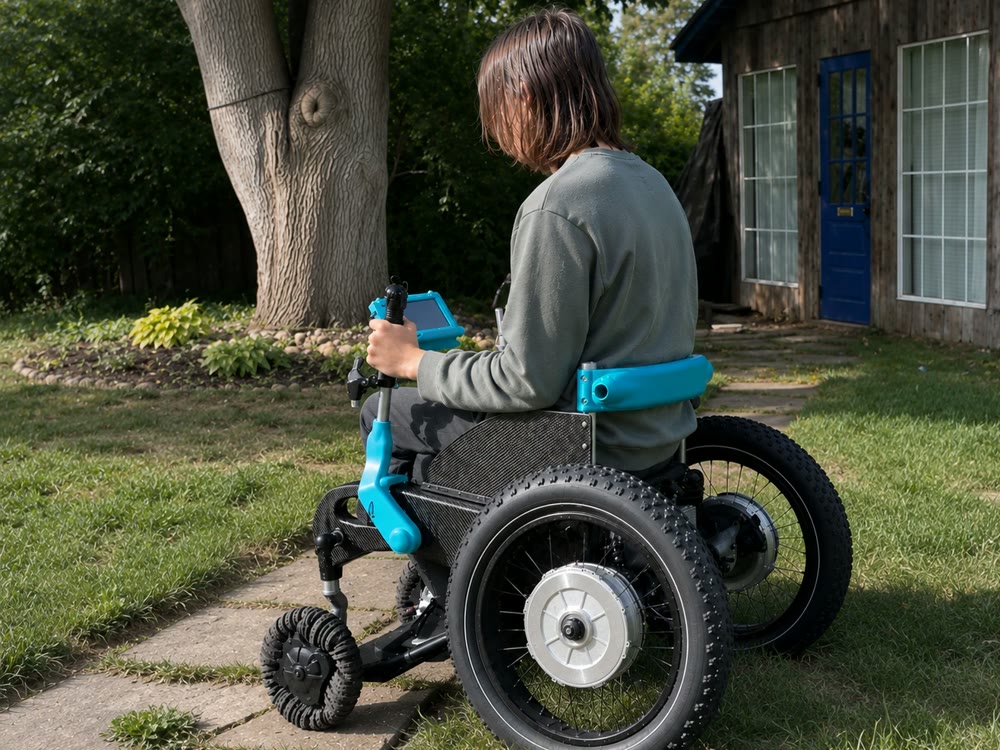
The second approach is a chair built for rough ground from the start. Hub motors drive the large rear wheels, rugged front casters handle uneven surfaces, and a joystick and display put control at the rider's hand. Carbon-fibre panels and printed parts keep it light and strong.
Tuned and Tested
Mobility equipment has to feel right, not just work. Motor controllers were tuned with diagnostic software for smooth, predictable response, and every generation was ridden outdoors by real users. What they found on grass, trails and snow went straight into the next design.
What This Means for Your Project
- User-centred design: we design with the people who will use the product, and test with them.
- Electromechanical integration: motors, controllers, batteries and structure designed as one system.
- Mixed materials: engineering-grade printed parts, carbon fibre and standard hardware, each where it works best.
- Iteration: each generation builds on what the last one taught us.
Building Something People Depend On?
From assistive devices to rugged equipment, designed and tested with real users. Let's talk about your project. Based in Guelph, Ontario.