


Designed to Be Built by Someone Else
Skyward telescopes: engineered for printing, assembly and documentation
Designing something for your own bench is one job. Designing it so that a stranger can print it, buy the right hardware, assemble it correctly and keep it working is a much bigger one. That second job is what our customers usually need, and the Skyward telescopes are where we learned to do it.
Designed for the Printer
Every printed part has to come off a typical home printer reliably, in the hands of someone we have never met. That shapes everything from wall thickness to how each part sits on the bed.
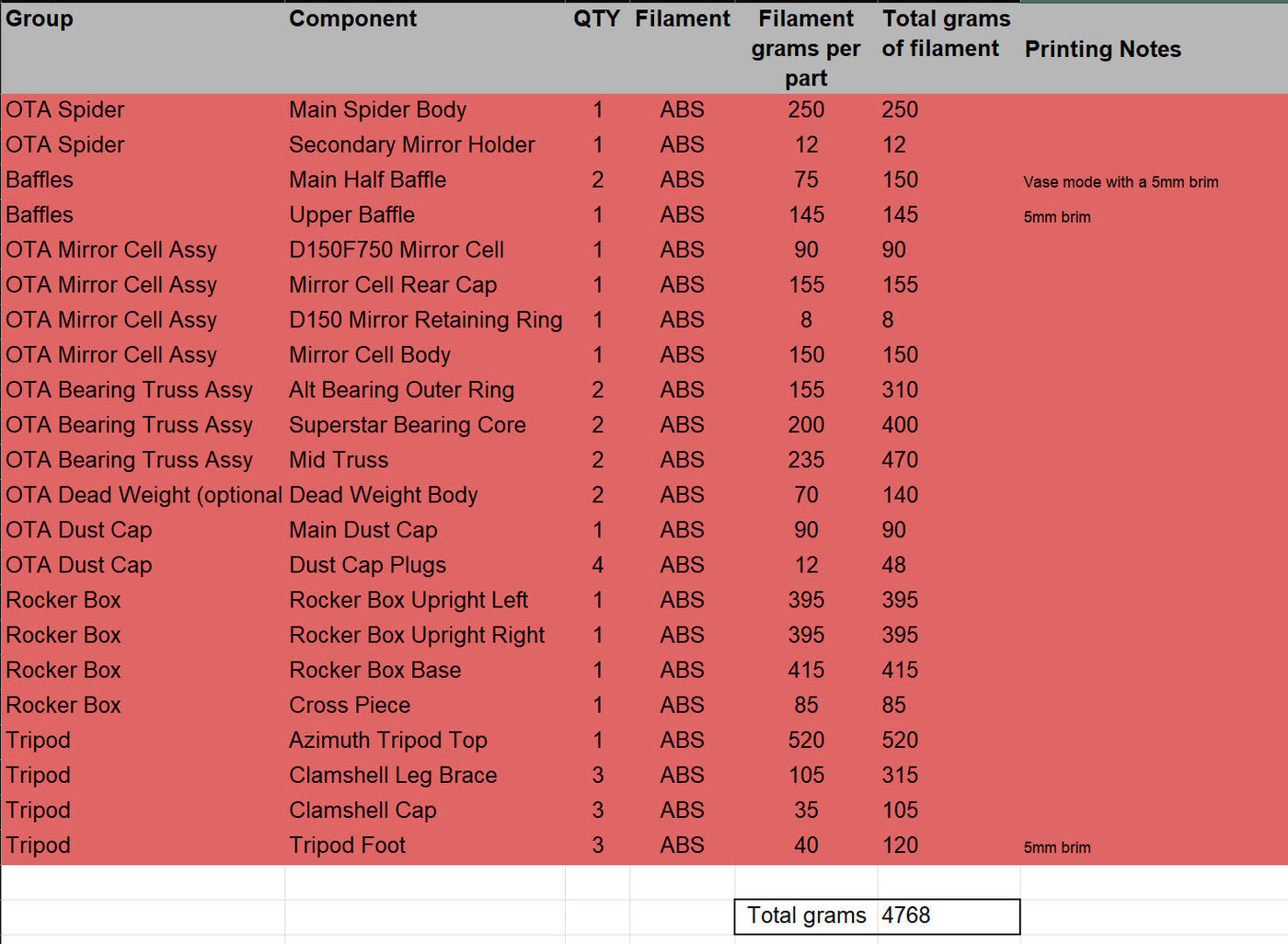
The bill of materials lists every printed part with its quantity, filament, grams per part and printing notes, such as which parts print in vase mode. A Skyward 150 adds up to 4,768 g of ABS. Purchased hardware has its own list, with quantities and sources.
Designed for Assembly
The optical tube uses aluminum extrusions and T-nuts, so the critical geometry comes from stiff, standard stock rather than long printed parts. Push-pull knobs on the mirror cell make collimation straightforward.
Small details save builders frustration. The mirror cell flips over to act as a guide for marking the exact centre of the mirror with a fine marker, a step that's normally fiddly and easy to get wrong.


Documentation That Does the Teaching
The assembly manual is illustrated step by step from the CAD model, and short video clips show each stage of the optical tube assembly. Together with the bill of materials, they let a first-time builder finish a working telescope without calling us.
The manual was tested the hard way: at regular build days, volunteers assembled telescopes from it, and their feedback went straight back into both the manual and the design.


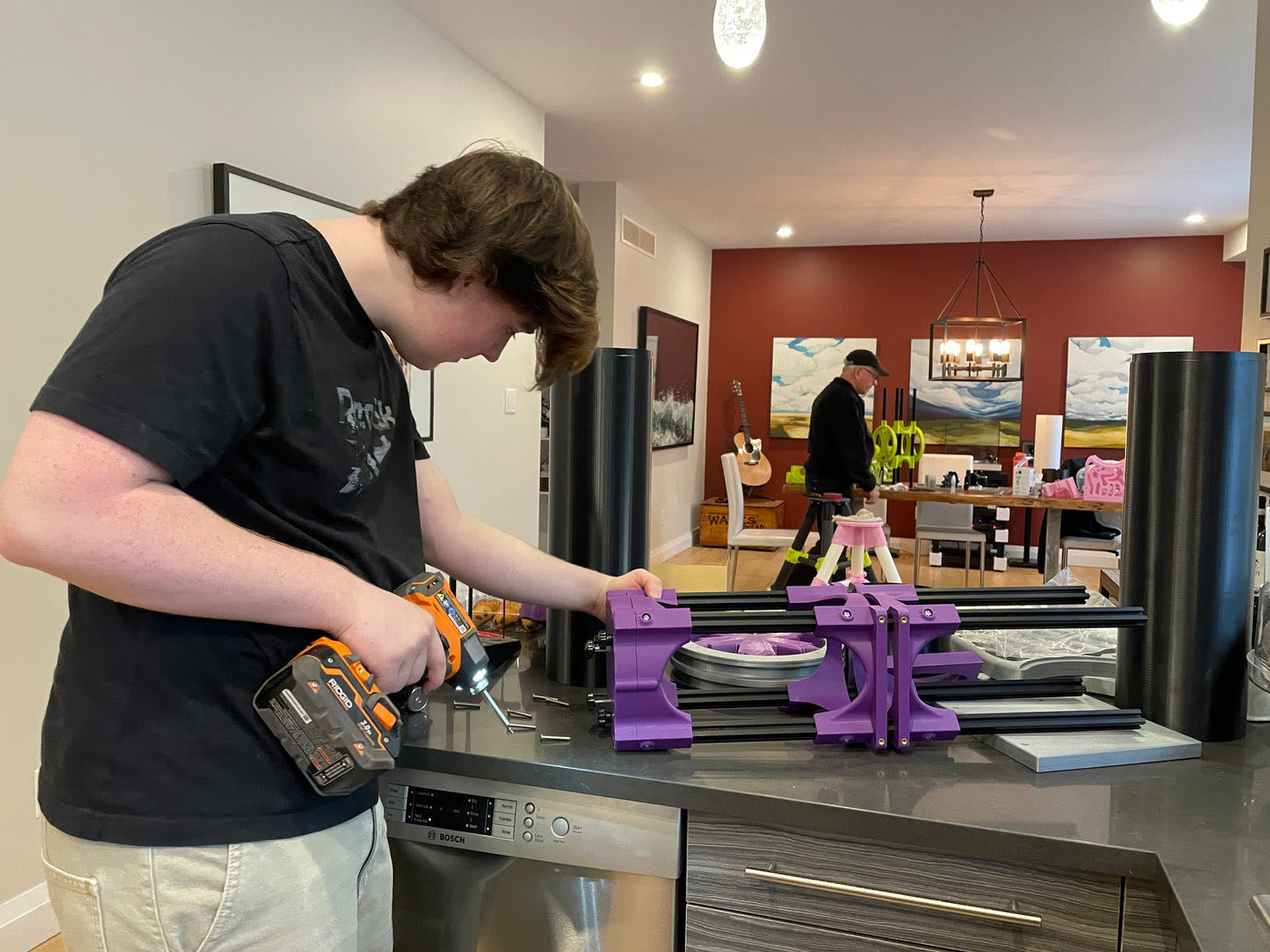
Volunteers building Skyward 150s from the manual at a build day.
Solving Real Problems
Feedback from real use drove most revisions:
- Heavy cameras: phones mounted at the eyepiece tipped the telescope forward. The fix is a counterweight that holds dead D and AA batteries, a standard weight found in almost every home.
- Image quality: a spider variant reduces diffraction spikes, and a redesigned baffle controls stray light better and is more robust, printed in PETG-CF.
- New uses: a dovetail core mounts the optical tube on standard equatorial mounts for astrophotography, and optional solar observing parts came out of the 2024 eclipse.

Built to Be Personalized
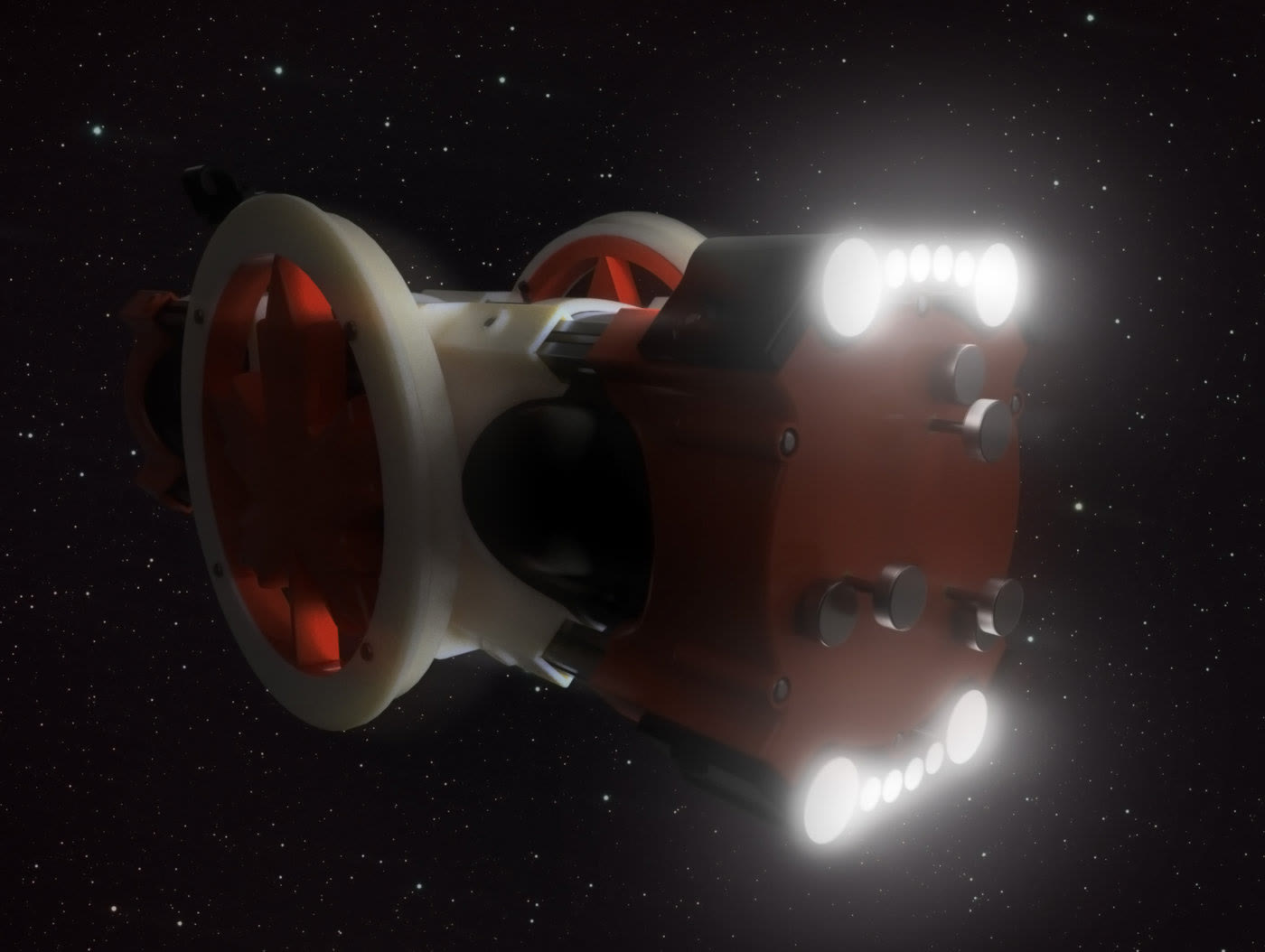
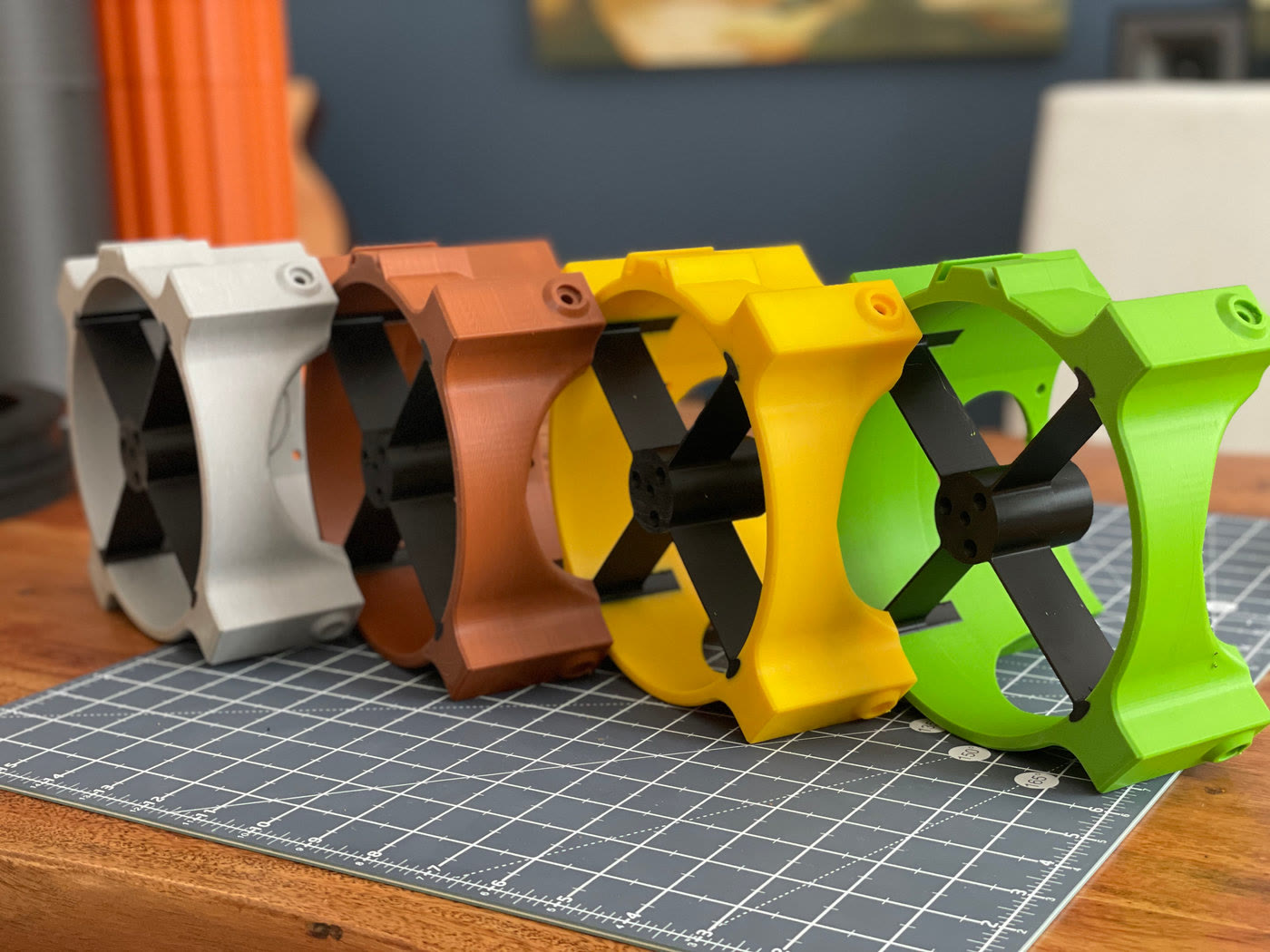
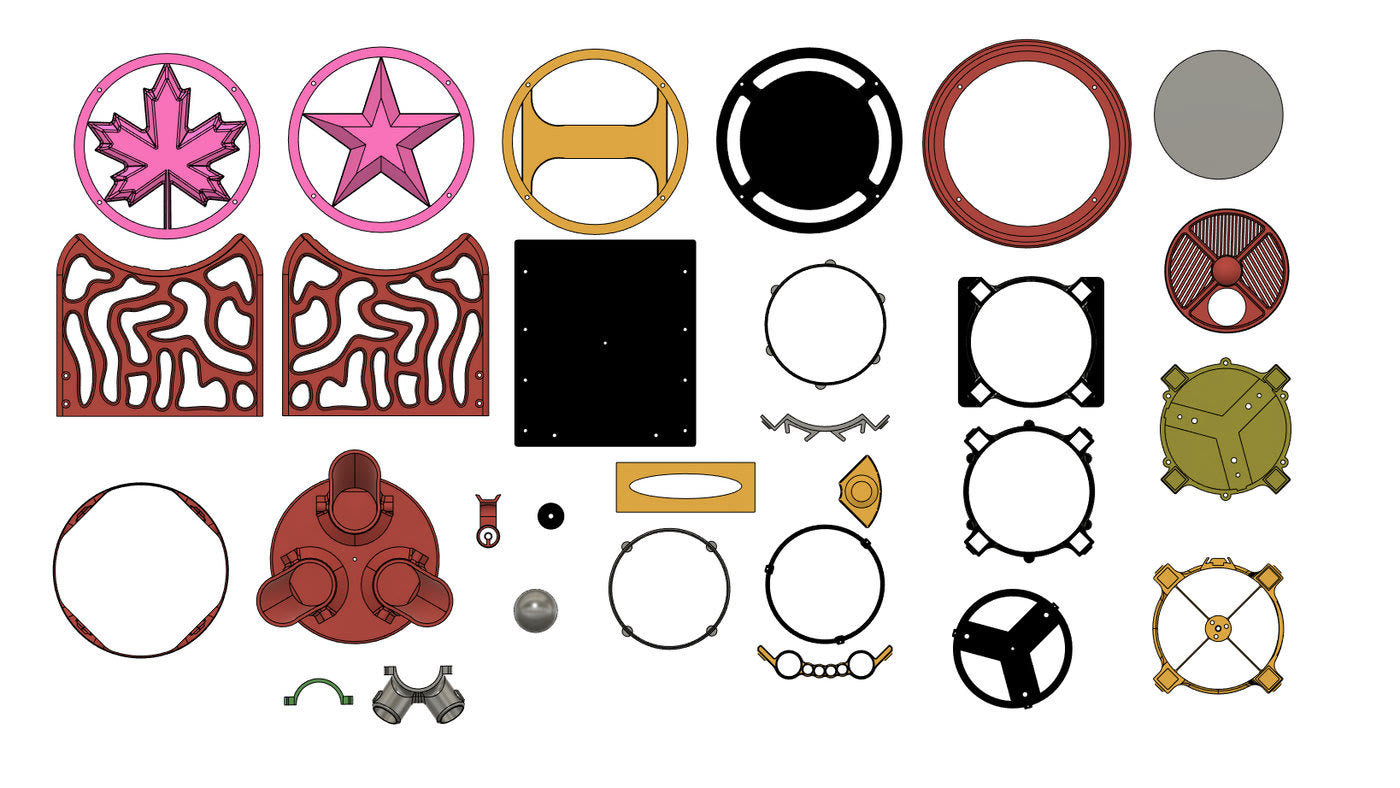
The altitude bearing takes interchangeable cores: a Super Star, a Maple Leaf, a Dovetail core, or a Custom core with an insert for a logo. A university physics department's telescopes carry its own logo.
Colours are a filament choice, so every telescope can have its own character without changing a single file.


In Use
Skyward telescopes are on loan from a free community telescope library, in Grade 12 science classes, and with youth astronomy programs. A batch of thirty Skyward 200s was built for the Hamilton RASC's Young Galileos.
"The telescopes are wildly popular. Everyone who walks by is curious."— Michael Dinka, science teacher, Centennial CVI, Guelph
What This Means for Your Project
- Design for manufacture: parts that print reliably and repeat, so the tenth unit matches the first.
- Revision control: every change tested and released as a numbered version.
- Documentation: bills of materials, illustrated manuals and videos, so your team can build, service and replace parts without us.
- Built-in branding: logos and colours designed in, not stuck on.
Need Something Others Can Build?
From one prototype to a documented design your team can reproduce. Let's talk about your project. Based in Guelph, Ontario.