


30 Telescopes for Young Galileos
Small-batch production of a 6 kg printed assembly, documented so volunteers could build it
One telescope is a project. Thirty identical telescopes, assembled by volunteers rather than a factory, is a production run. The difference is in the planning, the parts and above all the documentation.
The Brief
Young Galileos pairs students with experienced mentors to learn the night sky. Each family needed a real instrument, not a toy: every Skyward 200 is built around a 200 mm parabolic mirror from GSO, optics trusted by astronomers worldwide. And thirty of them had to be built to the same standard by volunteers working weekends.
Planning a Production Run
At about 6 kg of printed parts per telescope, the batch called for roughly 180 kg of engineering-grade filament, printed on our own farm. At that volume, small things add up: a part that fails one print in ten, a hole that needs drilling out, or a fiddly assembly step becomes thirty problems.
So the design is built for repeatability: parts that print reliably, standard hardware, and assemblies that go together the same way every time.

Documentation That Does the Teaching
The 150-page build manual takes a builder from boxes of parts to a collimated telescope, step by illustrated step. It's written for people who have never built a telescope, because most of the volunteers hadn't.
Good documentation is what makes a batch scale: it moves the knowledge out of the designer's head and onto every workbench at once.
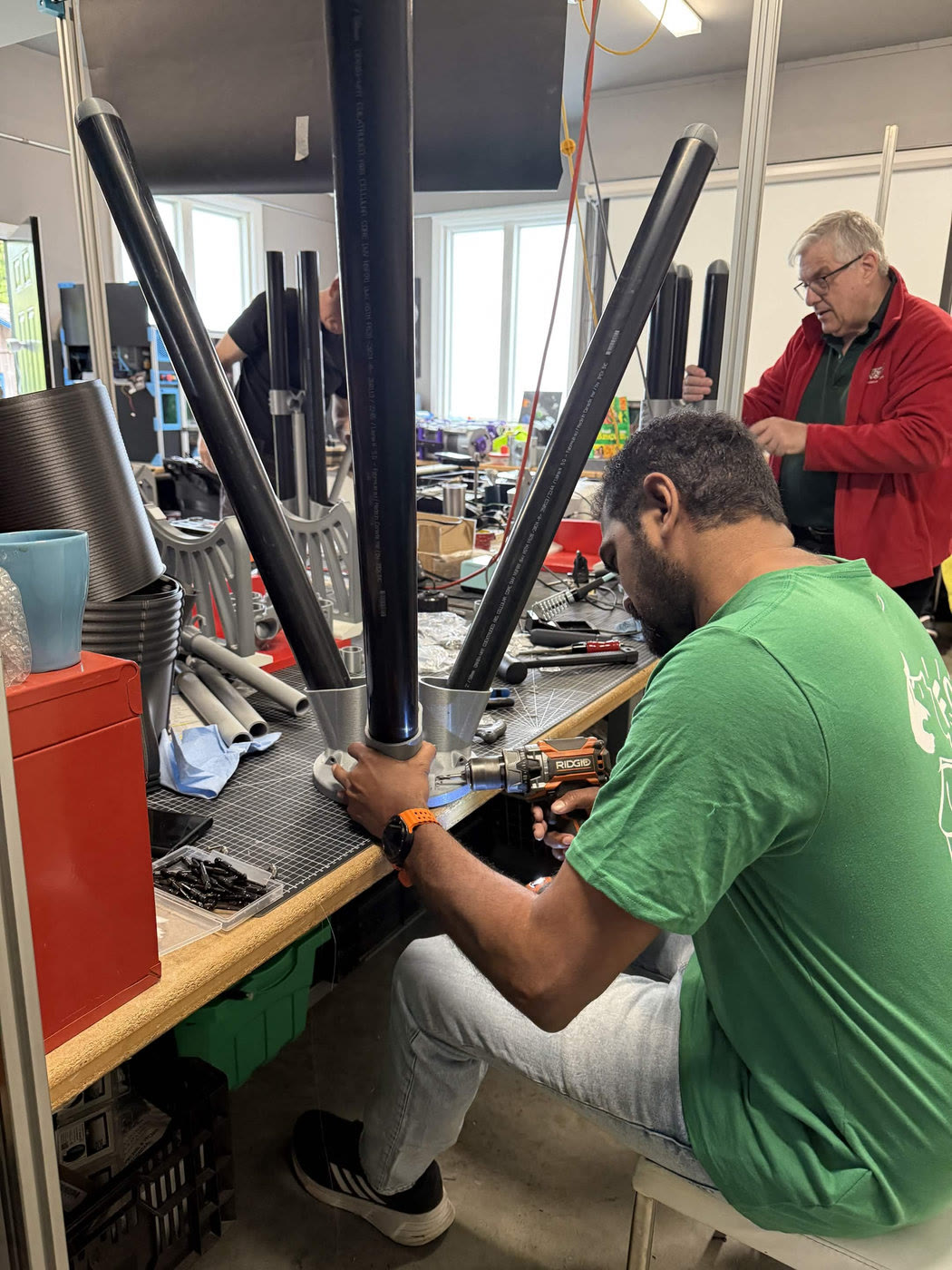
Build Days
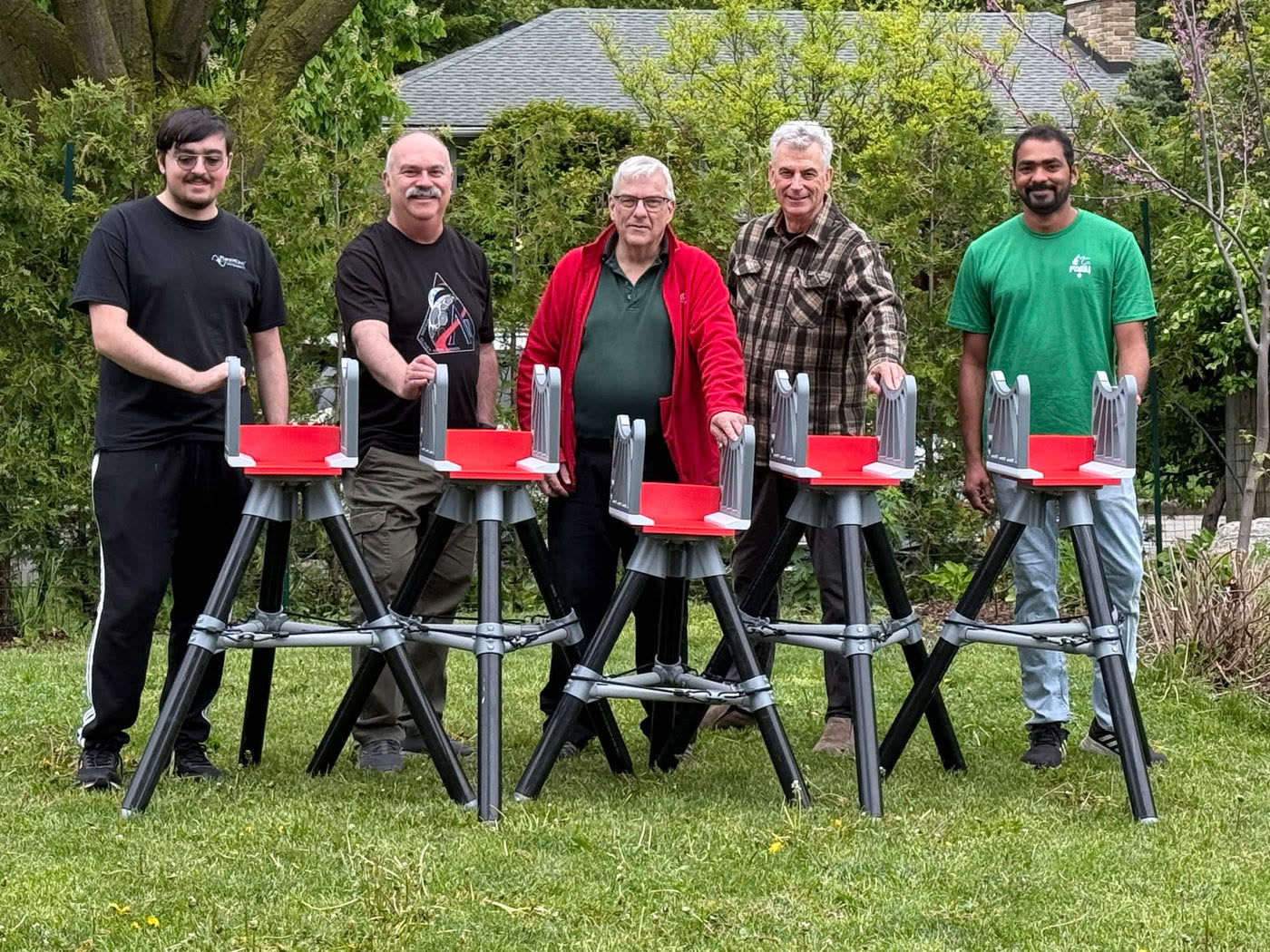
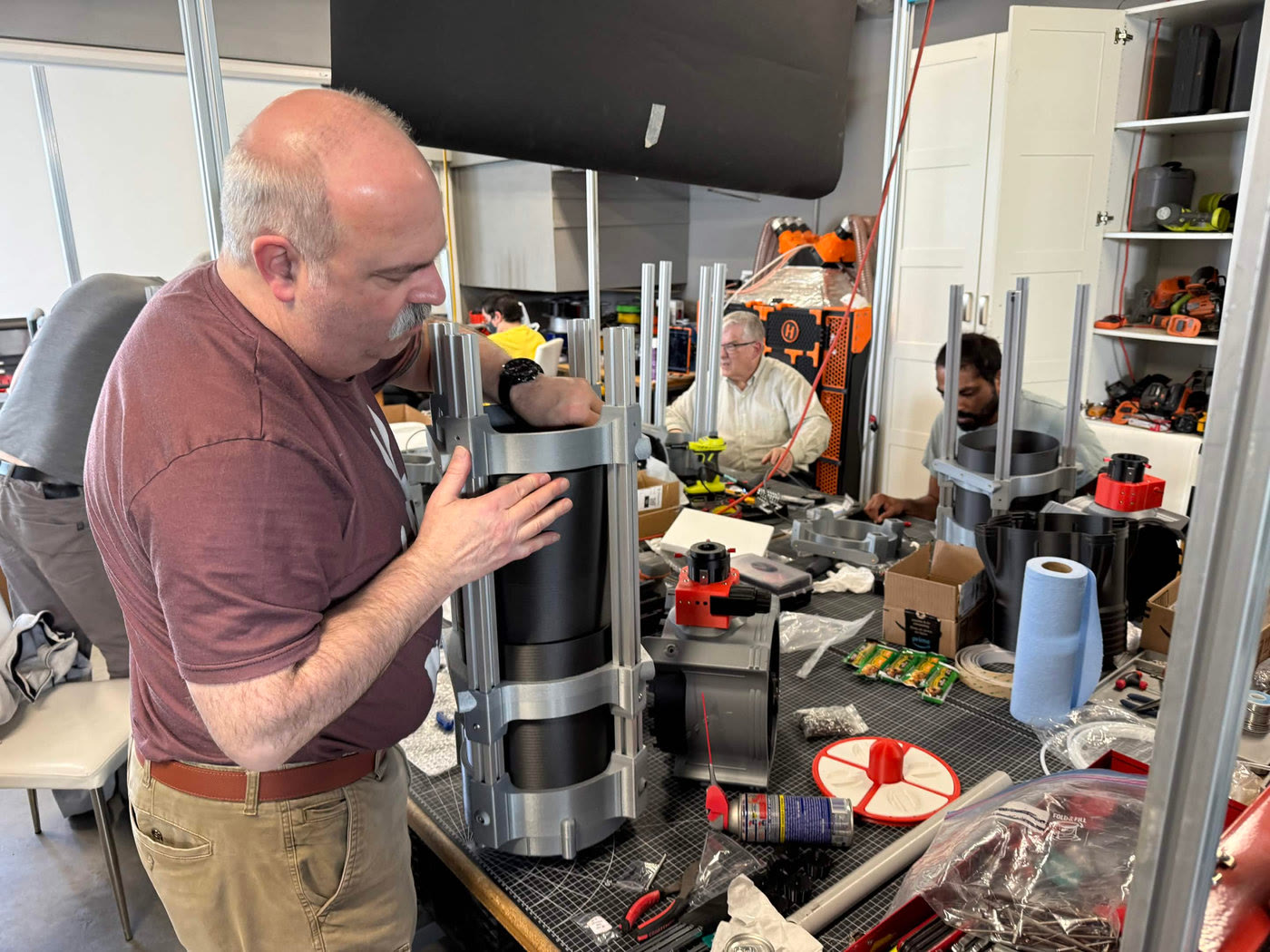
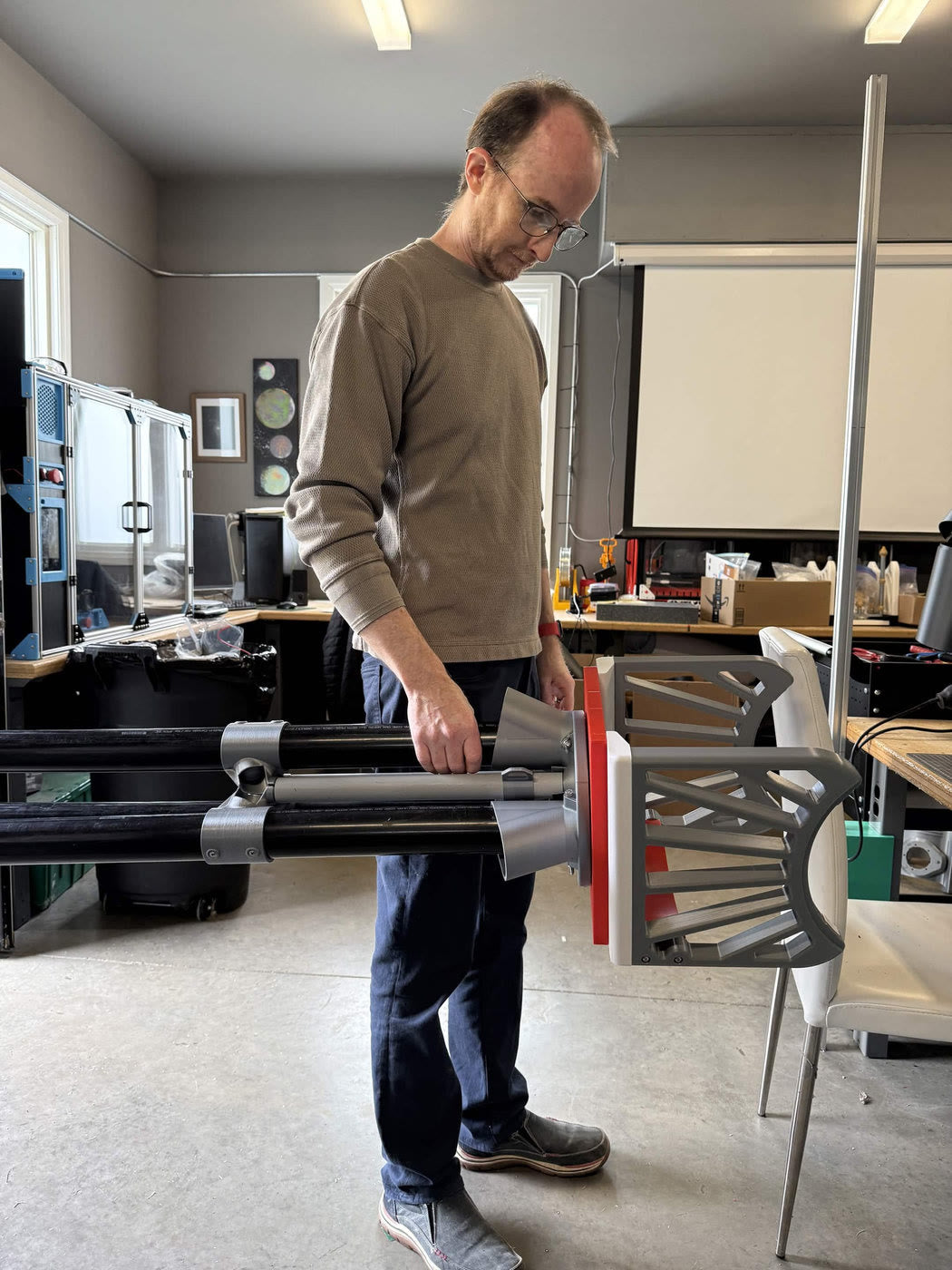
Members of the Hamilton Centre of the RASC came to the workshop on weekends, assembling tripods, fitting components and turning boxes of parts into rows of finished telescopes. The first ten were completed this spring.
The Result
Thirty telescopes, built by volunteers for young astronomers they haven't met yet. Thirty families with an instrument capable of serious views of the Moon, planets, star clusters, nebulae and galaxies for years to come.
What This Means for Your Project
The same approach works for any batch: fixtures for a production line, demo units for a sales team, or kits for a classroom.
- Designed for repeatability: the thirtieth unit matches the first.
- Planned to the gram: material and print time known before production starts.
- Documented for your team: build manuals so your own people can assemble, service and replace parts.
- Reprintable spares: any printed part can be made again from the same files.
See how we design Skyward telescopes to be built by others: Designed to Be Built by Someone Else.
Need a Batch, Not Just a Prototype?
From five units to fifty, designed and documented to be built right every time. Let's talk about your project. Based in Guelph, Ontario.